
346.1K
Downloads
663
Episodes
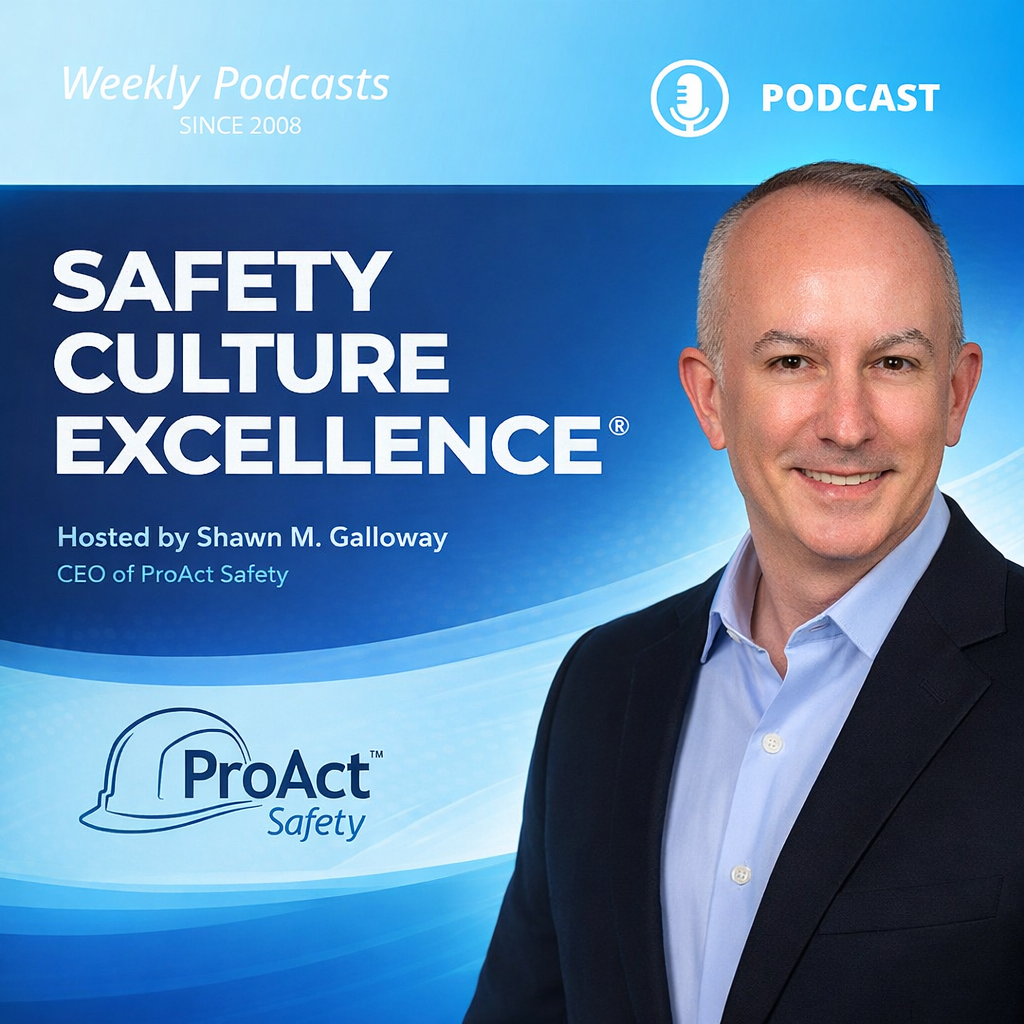
Safety Culture Excellence is a weekly series designed to support your efforts towards excellence in performance and culture. For more information or to contact the host, visit www.ProActSafety.com.
Episodes

16 hours ago
16 hours ago
This the Safety Culture Excellence® podcast, hosted by Shawn Galloway, CEO of ProAct Safety.
This week's podcast discusses "Unintended Consequences." Have you identified your most likely low-probability risks? https://proactsafety.com/blog-posts/unintended-consequences
Enjoy the podcast!
Shawn M. Galloway
Join my June 15th session at Safety 2026:
Shape Better Safety Decisions with Dissenting Views

Shape Better Safety Decisions with Dissenting Views
Monday May 25, 2026
Monday May 25, 2026
This the Safety Culture Excellence® podcast, hosted by Shawn Galloway, CEO of ProAct Safety.
This week's podcast discusses "Accountability vs. Management Metrics." Does your organization use more than lagging indicators? https://proactsafety.com/blog-posts/accountability-vs-management-metrics
Enjoy the podcast!
Shawn M. Galloway
The balanced-scorecard approach helps organizations to measure safety three other ways and build the association between these metrics and accident data.

Monday Apr 13, 2026
Monday Apr 13, 2026
This the Safety Culture Excellence® podcast, hosted by Shawn Galloway, CEO of ProAct Safety.
This week's podcast discusses "On-the-Job Training." Does your onboarding include mentoring? https://proactsafety.com/blog-posts/ojt
Enjoy the podcast!
Shawn M. Galloway
Safety Excellence in all formats. What's on your bookshelf?

Monday Mar 09, 2026
Monday Mar 09, 2026
This the Safety Culture Excellence® podcast, hosted by Shawn Galloway, CEO of ProAct Safety.
This week's podcast is about "Negative Positive Reinforcement." What message gets reinforced in your organization? https://proactsafety.com/blog-posts/negative-positive-reinforcement
Enjoy the podcast!
Shawn M. Galloway
Are your leaders trained to coach effectively?

Monday Dec 29, 2025
Monday Dec 29, 2025
Hello, welcome to the Safety Culture Excellence© podcast, hosted by Shawn Galloway, CEO of ProAct Safety.
This week's podcast is about "Mindfulness." Do your supervisors coach with specific focus? https://proactsafety.com/solutions/consulting/leadership-safety-coaching
I hope you enjoy the podcast. Have a Happy New Year!
Shawn M. Galloway
Last call! *Through 2025 only! Receive complimentary access to 60 Minutes on Safety Excellence with your proof of purchase for Shared Ownership: Engaging the Subcultures.

Monday Dec 01, 2025
Monday Dec 01, 2025
Hello, welcome to the Safety Culture Excellence podcast, hosted by Shawn Galloway, CEO of ProAct Safety.
This week's podcast discusses the needs of "Individuals vs Workforces." Do your leaders have the skills to direct your teams? https://proactsafety.com/solutions/consulting/leadership-development
I hope you enjoy the podcast. Have a great week!
Shawn M. Galloway
Receive complimentary access to 60 Minutes on Safety Excellence with your 2025 proof of purchase of Shared Ownership: Engaging the Subcultures.
Monday Nov 24, 2025
Monday Nov 24, 2025
Hello, welcome to the Safety Culture Excellence podcast, hosted by Shawn Galloway, CEO of ProAct Safety.
This week's podcast asks "How Rigid Are Your Safety Rules?" Need an expert on demand? https://proactsafety.com/solutions/consulting/leveraged-expert-support-and-monitoring
I hope you enjoy the podcast. Have a great week!
Shawn M. Galloway
Harness the Power of Employee Engagement with Shared Ownership
*2025 only, with proof of purchase receive complimentary access to quarterly networking discussion with Shawn Galloway.
*2025 only, with proof of purchase receive complimentary access to quarterly networking discussion with Shawn Galloway.
Monday Oct 20, 2025
Monday Oct 20, 2025
Hello, welcome to the Safety Culture Excellence podcast, hosted by Shawn Galloway, CEO of ProAct Safety.
This week's podcast is about "Bridging the Gap." Do your leaders have the skills to help everyone bridge your gap? https://proactsafety.com/solutions/consulting/leadership-safety-coaching
I hope you enjoy the podcast. Have a great week!
Shawn M. Galloway
Shared Ownership to engage your sub cultures. *Available in all formats.
Monday Aug 04, 2025
Monday Aug 04, 2025
Hello, welcome to the Safety Culture Excellence podcast, hosted by Shawn Galloway, CEO of ProAct Safety.
This week's podcast is about "What Not to Do." Does your safety training include examples of what to do, rather than what to avoid? Coaching can help reinforce this positive mindset. https://proactsafety.com/solutions/workshops/teaching-supervisors-to-be-safety-coaches
I hope you enjoy the podcast. Have a great week!
Shawn M. Galloway
All of our books are available in all formats on Amazon.
Monday Jul 21, 2025
Monday Jul 21, 2025
Hello, welcome to the Safety Culture Excellence podcast, hosted by Shawn Galloway, CEO of ProAct Safety.
This week's podcast is about "Clear Expectations and Accountability." Leadership development should measurably enhance knowledge and capabilities. https://proactsafety.com/solutions/consulting/leadership-development
I hope you enjoy the podcast. Have a great week!
Shawn M. Galloway
Get a free annual subscription to our quarterly 60 Minutes on Safety Excellence discussion with your proof of purchase for Shared Ownership. (Offer valid through 2025)